Ultracold Pharmaceutical Logistics: Keys to Effective Management in a Competitive Environment
 28 enero, 2026
Ultracold pharmaceutical logistics is essential to preserve the integrity of thermolabile and biotechnological medicines at extreme temperatures (up to –70 °C), providing a competitive advantage to those who master it.
Within the framework of an integrated sector logistics model, its orderly and scalable implementation increases efficiency and operational resilience. Its effectiveness requires strict compliance with regulations (GDP, temperature control, traceability), ULT equipment, advanced packaging, real-time monitoring and specialised handling protocols.
Coordination between stakeholders, strategic alliances, training and data‑driven forecasting reduce risks and ensure supply and the pharmaceutical cold chain. Technologies such as IoT, BI, AI and blockchain enable visibility, optimisation and traceability, mitigating challenges such as temperature excursions, lack of capacity and demand variability.
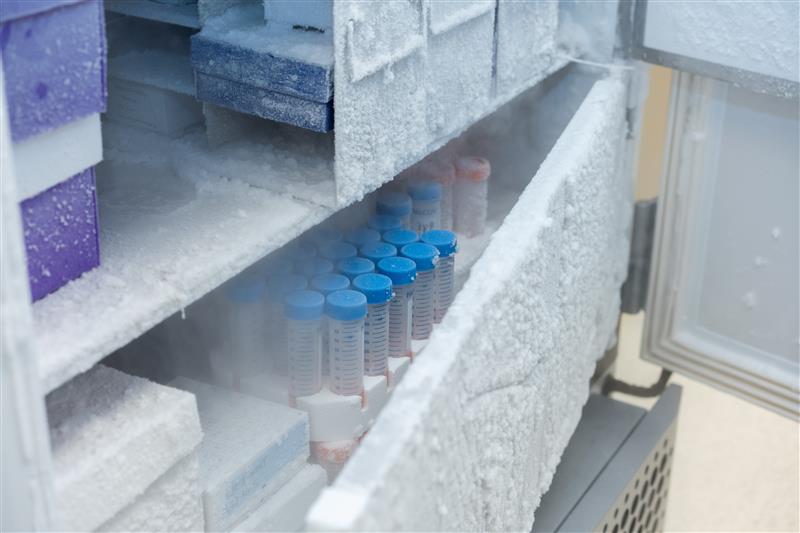
Importance of Ultracold Pharmaceutical Logistics
Ultracold pharmaceutical logistics has become a key pillar to ensure the viability of thermolabile medicines, advanced therapies and biotechnological products that require ranges reaching –70 °C or even lower.
This segment demands precision, continuous control and highly standardised processes to comply with strict storage, distribution and transport conditions across the territory.
In an environment where innovation advances rapidly, having a robust ultracold logistics chain represents a decisive competitive advantage for laboratories, hospitals and specialised operators.
Regulatory Compliance in Pharmaceutical Logistics
The European and national regulatory framework sets clear guidelines to ensure product integrity, including Good Distribution Practices (GDP), temperature‑control regulations and traceability requirements.
In this context, regulatory compliance is not only a legal obligation but the element that guarantees product quality, patient safety and supply‑chain reliability.
Critical Elements of Ultracold Logistics
Ultracold logistics combines several essential components:
● Ultra‑low temperature (ULT) equipment capable of maintaining –70 °C or lower.
● Advanced insulated packaging systems for long or international routes.
● Hyper‑precise real‑time monitoring, with alarms, alerts and continuous records.
● Specialised handling protocols to prevent thermal excursions.
Coordination in the Supply Chain
Coordination between the different agents is vital to ensure that medicines arrive in optimal conditions. In the pharmaceutical supply chain, every minute and every degree counts. For this reason, forecasting, planning and communication between participants are essential.
Key stakeholders include:
● Pharmaceutical and biotechnology laboratories
● Specialised logistics operators, such as Logista Pharma
● Hospitals and pharmacies
● Certified transport providers
● Packaging and monitoring‑technology suppliers
Collaboration among them is indispensable to avoid risks, guarantee supply and address challenges such as demand variability, management of multiple temperature ranges, lack of real‑time traceability, or manual / non‑standardised processes that may endanger the cold chain and cause thermal excursions in ultracold transport.
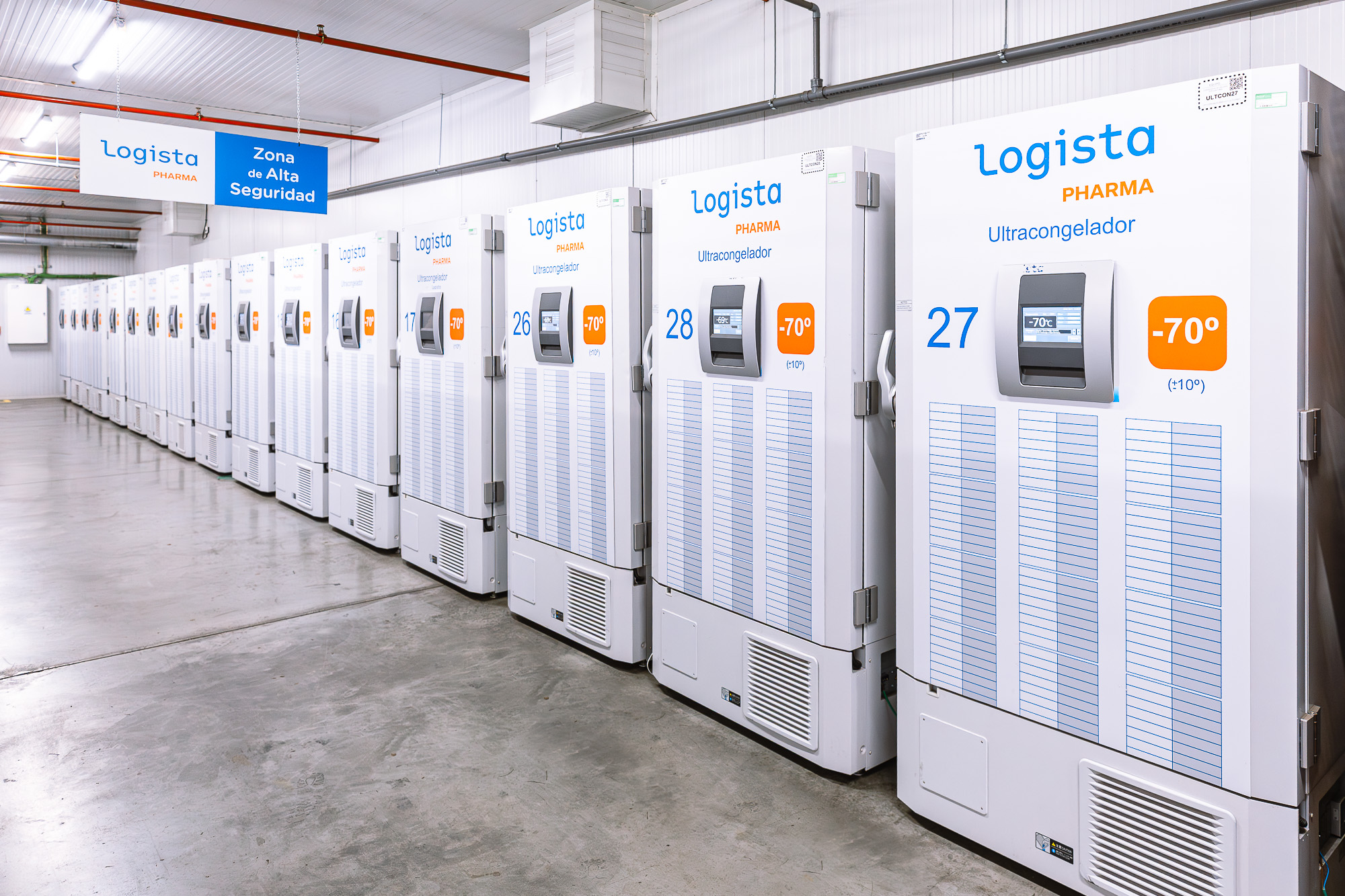
Strategies for Improved Collaboration
To increase efficiency and minimise risks, companies are establishing strategic distribution agreements to guarantee capacity and reduce lead times within an integrated logistics approach.
They are also developing data‑driven forecasting models, creating digital collaborative platforms to share information in real time, and placing strong emphasis on specific training for all professionals involved.
Technology in Ultracold Logistics
Digital transformation directly strengthens the safety and efficiency of medicine transport and ultracold logistics distribution:
● IoT: constant monitoring, geolocation, hyper‑precise control and alerts
● BI (Business Intelligence): advanced analytics to improve routes, anticipate risks and optimise processes
● AI (Artificial Intelligence): demand prediction, deviation analysis and automation
● Blockchain: ensures immutable traceability from origin to destination
These technologies help reduce errors, enhance service quality and reinforce product integrity throughout the entire pharmaceutical supply chain and cold chain.
FAQs
1. What differentiates ultracold pharmaceutical logistics from the conventional cold chain?
The traditional cold chain normally operates at +2 °C to +8 °C or –20 °C.
Ultracold pharmaceutical logistics involves extreme temperatures (–40 °C, –70 °C or lower) and requires specialised equipment, high‑performance insulated packaging and high‑precision monitoring.
2. Why is regulatory compliance considered the cornerstone of ultracold logistics?
Because it ensures patient safety, product effectiveness and compliance with GDP guidelines. Without a solid regulatory framework, the risk of product loss or lack of traceability increases significantly.
3. Which technologies are essential (IoT, BI, AI, blockchain) and what do they provide?
● IoT: real‑time tracking
● BI: analytics to optimise processes
● AI: predictions and intelligent automation
● Blockchain: total transparency and traceability
4. What are the main operational challenges and how can they be mitigated?
● Thermal excursions → specialised containers + IoT monitoring
● Lack of visibility → digital platforms + BI
● Limited ultracold capacity → specialised infrastructure
● Demand variability → AI‑based forecasting
5. What role do training and strategic alliances play in the success of the supply chain?
Training ensures correct handling, while strategic alliances increase capacity, improve response times and ensure availability.
Logista Pharma maintains agreements and ongoing training programmes to guarantee a safe, efficient and competitive service.